I participated in Matthew Payne‘s amazing panel on “The Unplayable Past: Video Games and the Struggle over Historical Authenticity” at SCMS 2024 in Chicago!
I presented part of my new research on technothrillers, and particularly author Tom Clancy’s impact on military shooters.
My Abstract:
Technothriller author Tom Clancy’s brand often features the strong fetishization of advanced military weaponry, elite-trained soldiers, cutting-edge technology, an emphasis on ‘intel’ and the rationalization of extrajudicial force. This is presented in a tense, technologically-exhaustive form, while emphasizing the uprightness of American values and superiority of the American military man, in an entertaining package. Trading on “authenticity” built on the false basis of “accurate” technological details, Clancy stories are seemingly the most pure and transmissible iterations of the genre across media, most notably video games, with their warmongering values and terminal paternalism, but also their strident resistance to any critical or ethical self-inquiry. They have contributed to a highly polarized political condition of the nation with a steady forty-year-long media diet of political affect around making America great again, along with a particularized and uniquely American sense of masculinity as fundamentally heroic and victimized by threats both real and imagined. For this reason, it is important to sit with these enduring images, and deeply understand how they proliferate a set of ‘noble’ values and certainties for a generation, that so effectively validate some, while effacing the experiences of others.
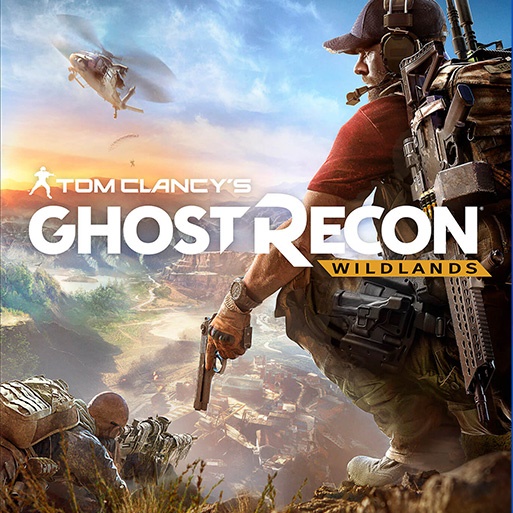
The Clancy man operates as a kind of political motif, reimagining a new hero that, while just as generic, is adapted to suit the longings of a modern player. As part of a larger consideration of the impact of the technothriller on video games, this presentation considers the political affective intensities of Clancy brand franchise games like Rainbow Six (1998–present), Ghost Recon (2001–present), Splinter Cell (2002–2013) and The Division (2016–present). What issues from such playable Clancy men is a suffused political affective intensity, intended to recuperate a militarized man, and to instill a sense of certainty, where in fact there is none. Connecting technothriller game to the existential anxiety of the Cold War, the desire to recuperate militarized man from the Vietnam War, and the terror of unknown enemies, this essay shows how the Clancy man is actually birthed from fear, uncertainty, and lack of control in the face of changing times.
 SORAYA MURRAY